- Category: Soviet porcelain
The Horodnitsa Porcelain Deer – a miniature from the 1950s
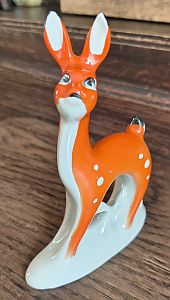
The small orange deer figurine from the Horodnitsa Porcelain Factory is considered one of the most characteristic animal figurines produced in the Soviet Union during the 1950s.
Today, it is regarded as one of the symbols of Soviet decorative porcelain miniatures.
The figurine was produced at the Horodnitsa Porcelain Factory (Городницький фарфоровий завод), located in present-day Ukraine. The factory was one of the most important manufacturers of household and decorative porcelain in the USSR and became especially famous for its small animal figurines and fairy-tale characters.
The model depicts a young deer with a slender silhouette, delicate legs, and large expressive eyes. The figurine is covered with a characteristic orange-honey glaze with lighter details on the belly and muzzle.
## Dimensions
* height: approximately 15 cm
* length: approximately 11 cm
* width: approximately 3–4 cm
The figurine was made of glazed and hand-painted porcelain. Despite its relatively small size, it is distinguished by the precision of its sculptural modeling and the fairy-tale style characteristic of the 1950s.
The deer design was most likely created in the first half of the 1950s, around 1954–1956. Its form perfectly reflects the aesthetics of early post-war Soviet porcelain: simplified soft lines, slightly childlike expression, subtle proportions, and a combination of realism with the style of illustrated children’s books.
In later years, the factory also produced a larger version of the deer figurine, more realistic and decorative in style, already typical of 1960s design.
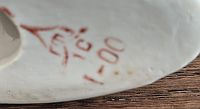
On the underside of the figurine there is a red Horodnitsa Porcelain Factory mark used between 1962 and 1972.
The Horodnitsa factory operated from the late 18th century and was one of the oldest porcelain centers in Eastern Europe. During the Soviet period, the factory gained enormous popularity thanks to the mass production of porcelain animal figurines that appeared in millions of homes throughout the USSR.
The author of the design has not been conclusively identified. The name Boris Vorobyov (Борис Воробьёв) is occasionally mentioned, although without definitive confirmation. The figurine is generally attributed to the circle of designers associated with the Horodnitsa Porcelain Factory during the mid-1950s, most likely inspired by the Soviet school of animal decorative porcelain.
